
Categories
Tags
Recent Blogs
Hydraulic Cylinder Seal Kits: How to Match the Right Kit to Your Cylinder

What is in a hydraulic cylinder seal kit?
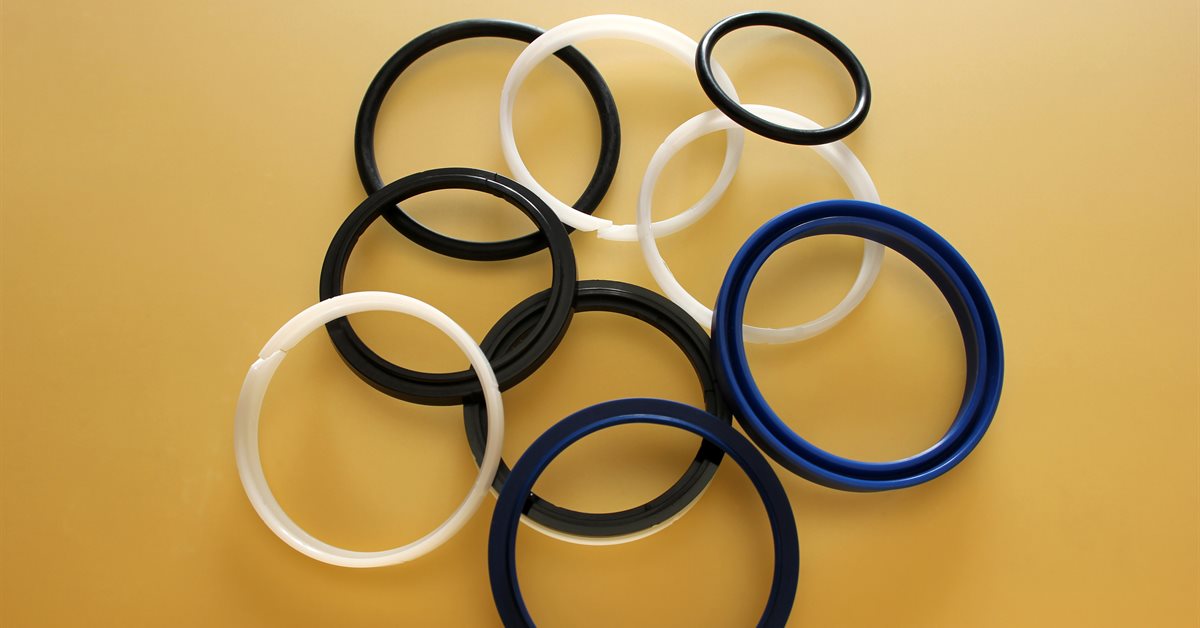
A hydraulic cylinder seal kit contains every seal needed to reseal one cylinder: the rod seal, buffer seal, wiper, piston seal, wear rings, and the O-rings and backup rings for the gland and piston. Buying the full kit means all the seals are replaced together, so no old seal is left to fail.
| Seal | Where it sits | What it does |
|---|---|---|
| Wiper (scraper) | Outer end of the gland | Wipes dirt off the rod as it retracts |
| Rod seal | Inside the gland | Stops oil leaking out along the rod |
| Buffer seal | Inside the gland, before the rod seal | Absorbs pressure peaks to protect the rod seal |
| Piston seal | On the piston | Stops oil passing from one side of the piston to the other |
| Wear rings (guide rings) | On the piston and in the gland | Keep metal parts apart and carry side loads |
| O-rings and backup rings | Gland and piston static joints | Seal joints that do not move |
Kits are made for a specific cylinder, so the same machine can need several different kits: for example one each for the boom, arm and bucket cylinders.
What are the signs that cylinder seals have failed?
The signs of failed cylinder seals are oil on the rod or around the gland, a cylinder that drifts or creeps under load, slow or weak movement, and dirt or scoring on the rod. External leaks point to the rod seal or wiper, while drift with no visible leak usually points to the piston seal.
- Oil on the rod or dripping from the gland: rod seal or wiper wear.
- Boom, arm or forks drifting down when the controls are in neutral: piston seal bypass, or a leaking valve. Test the cylinder before replacing seals.
- Slow or weak movement under load: oil passing the piston seal.
- Scratches, pits or worn chrome on the rod: these damage new seals quickly, so the rod needs repair or replacement first.
- A torn or missing wiper: dirt will enter the cylinder and wear the rod seal.
Drift can also come from a leaking control valve or holding valve. A cylinder bypass test, done to the maker's procedure, shows whether the piston seal is at fault before the cylinder is stripped.
How do you match the right seal kit to a cylinder?
The surest way to match a seal kit is by the cylinder part number or the kit part number from the parts manual. Without either, measure the rod diameter, bore diameter and seal groove sizes, and note the machine make, model and serial number and the cylinder position. Photos of the old seals help confirm the profile.
- Find the cylinder part number. It is often stamped on the barrel or a tag near the cylinder base.
- If there is no number, record the machine make, model and serial number and which cylinder it is, such as boom, arm, bucket, steering or lift.
- Measure the rod diameter and the bore diameter.
- Remove the old seals carefully and measure the groove width, depth and diameter for each one.
- Photograph each old seal from the side so its profile can be matched.
- Send all of this together, so the kit can be checked against the cylinder rather than guessed.
Many cylinders look the same from the outside but use different seals. A kit matched only by the machine model can be wrong if the cylinder was changed during the machine's life. The guide to choosing a hydraulic pump replacement uses the same nameplate-first approach for pumps.
Which seal materials suit heat and heavy use?
Polyurethane is the most common material for rod seals and wipers on heavy equipment because it resists wear and extrusion. Nitrile rubber is used for O-rings, and PTFE compounds for piston seals and low-friction parts. For oil temperatures above the normal range, ask for a material rated for that heat, such as FKM.
| Material | Common use | Notes |
|---|---|---|
| Polyurethane (PU) | Rod seals, wipers, buffer seals | Tough and wear-resistant; check the temperature rating for hot climates |
| Nitrile rubber (NBR) | O-rings and static seals | Good with mineral hydraulic oil at normal temperatures |
| PTFE compounds | Piston seals, low-friction rod seals | Low friction and wide temperature range; often bronze or glass filled |
| FKM (fluoroelastomer) | O-rings and seals in hot systems | Higher temperature resistance than NBR |
| Polyacetal or fabric-reinforced resin | Wear rings | Carry side loads and stop metal-to-metal contact |
Machines working through GCC summers often run hot oil. If seals keep failing early, check the oil temperature and the seal material before simply fitting the same kit again.
What should you check when fitting a new seal kit?
Before fitting a new seal kit, inspect the rod, bore and piston for scoring, check the rod is straight, and clean every part. Use proper seal tools, never sharp screwdrivers, and fit each seal the right way round. Most early seal failures come from damage during fitting or from a scored rod.
- Rod: run a fingernail along it; any scratch you can feel will cut new seals. Replace or re-chrome a damaged rod.
- Bore: look for scoring and measure for wear or ovality.
- Grooves: clean out all old seal material and dirt.
- Fitting: use seal installation tools and a light coat of clean hydraulic oil; do not twist or stretch seals more than needed.
- Direction: check the lip direction of each seal against the photos or the parts manual.
- After assembly: cycle the cylinder slowly to bleed air, then check for leaks and drift.
Browse hydraulic cylinder seal kits, register a business account to order online, or send your cylinder details and measurements through the bulk enquiry form.
Gulf Parts Center supplies automotive, heavy equipment and industrial spare parts to businesses across the GCC, with next-day delivery to Saudi Arabia, UAE, Kuwait, Oman and Qatar, including customs clearance.
Frequently asked questions
Should all seals be replaced when resealing a cylinder?
Yes. Replace every seal in the kit, not just the one that is leaking. The other seals have the same age and wear, and the cylinder has to be stripped anyway.
Why does a cylinder drift down with no oil leak?
Drift with no outside leak usually means oil is passing the piston seal or leaking through a control or holding valve. A bypass test shows which one is at fault.
Can a scored cylinder rod be reused with a new seal kit?
Only if no scratch can be felt with a fingernail. Any scratch you can feel will cut the new seals, so a scored rod must be re-chromed or replaced before the new kit is fitted.


